
About this specimen
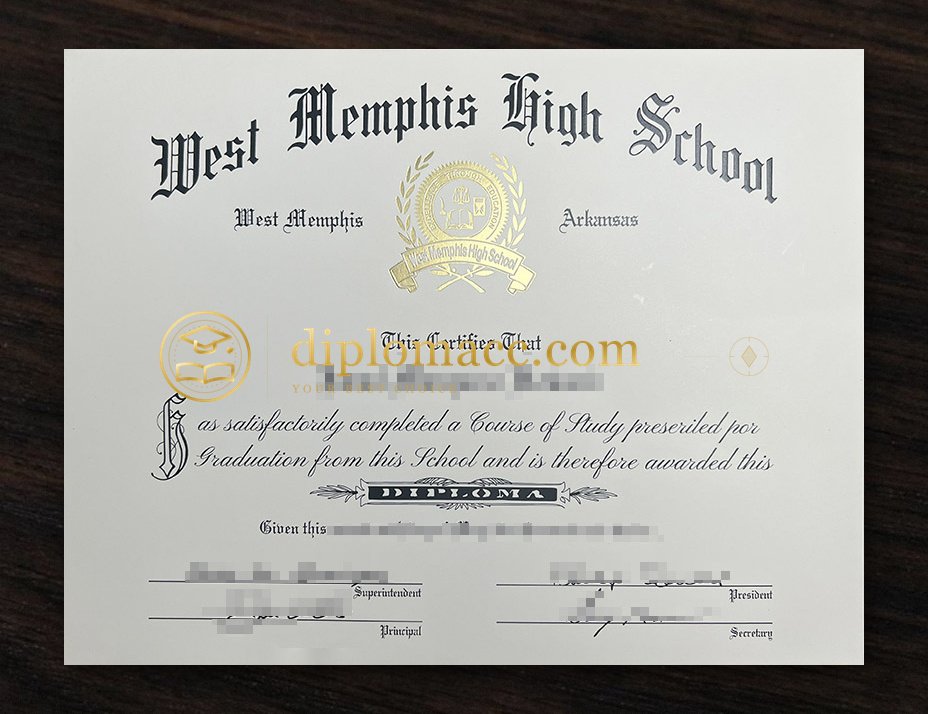
The paper substrate of a West Memphis High School diploma is a controlled security stock rather than ordinary certificate paper, and its properties are fixed at the pulp level before any printing occurs. Papers of this class are manufactured with built-in features such as a true watermark, visible and invisible ultraviolet-sensitive fibers, and multi-chemical sensitivity, and their distribution is restricted through written agreements between the paper manufacturer and the issuing authority to keep the stock out of the hands of forgers. The sheet is typically a tightly controlled 28-pound security grade, a weight that gives the document sufficient rigidity to resist creasing under handling while remaining compatible with laser and digital personalization workflows. The furnish is also formulated so that the paper reacts to chemical alteration agents: reagents are introduced into the pulp against the five families of known alteration chemicals, so that if oxidants, polar or non-polar solvents, acids, or alkalis are applied to attempt localized modification, noticeable colored stains appear through the paper and remain visible from either side.#West Memphis High School dipolma West Memphis High School degree West Memphis High School certificate.
The watermark in the diploma paper is created during the papermaking process rather than applied as a surface image, which makes it inseparable from the fiber matrix of the sheet. On a Fourdrinier machine equipped with a dandy roll, the watermark design is pressed into the wet paper, displacing some fibers and producing varying levels of light transmission that become visible from either side as a two-dimensional image when the sheet is held to the light. This type of mark is known as a true or Fourdrinier watermark, and copiers and scanners are not capable of replicating its dual-tone character. Because the watermark is a density variation within the fiber structure, it cannot be removed or corrupted without visibly damaging the sheet, and the watermark design is typically kept unique to the vendor rather than being commercially available. The mark therefore functions as a substrate-level authentication signal that survives handling and resists reproduction by ordinary office equipment.
- Smart methods to order aWest Memphis High School degree.
The printed surface of the diploma carries a separate layer of fine-line and micro-scale security texture that is independent of the paper’s internal watermark. A high-resolution border composed of clear and unbroken fine lines is a common feature; the lines may appear blurred or indistinct when the document is photocopied, exposing the copy as a reproduction. Microtext is printed as a line of characters readable only under magnification, and when a reproduction is attempted the line appears solid or jagged rather than resolving into individual letters. Iridescent or rainbow printing uses two print units to blend different ink colors on press, creating gradations that are difficult to reproduce accurately on many color copiers. These printed features sit on the surface of the sheet, yet they complement the paper’s internal structure by verifying the printing origination independently of the watermark.
The official seal on the diploma is realized through embossing or foil stamping, a mechanical operation that introduces a three-dimensional topography no flat printing process can replicate. In blind embossing, the paper is pressed between a male die and a female counter-die, compressing the fibers locally to create a bas-relief impression of the seal design; the relief is read through directional light and shadow rather than through an applied color layer. Alternatively, hot foil stamping positions a metallic foil layer over the paper and presses a heated die against a matching counter-die, simultaneously bonding the reflective foil to the surface and deforming the fibers beneath it. Foil embossing can be combined with other security features such as spot colors or invisible fluorescent inks to build a layered authentication profile. Because the seal is a deformation of the sheet rather than an ink film, it cannot be lifted or transferred intact from one document to another, and any attempt to remove it will leave a visibly disturbed paper surface.
The layered construction of the diploma therefore depends on the interaction of substrate-level, surface-level, and mechanically formed features. The controlled security paper with its true watermark and chemical sensitization establishes the sheet as a restricted material; the high-resolution border, microtext, and iridescent printing establish the graphic as originating from a security printing environment; and the embossed or foil-stamped seal establishes a physical deformation that resists replication by ordinary digital or office equipment. A photocopy or digital scan may capture the visible layout and the outline of the seal, but it will fail to reproduce the transmitted-light watermark, the chemical reactivity of the treated pulp, the fine-line integrity of the border, and the tactile relief of the die impression, leaving the physical sheet as the only carrier of the complete set of authenticating signals.